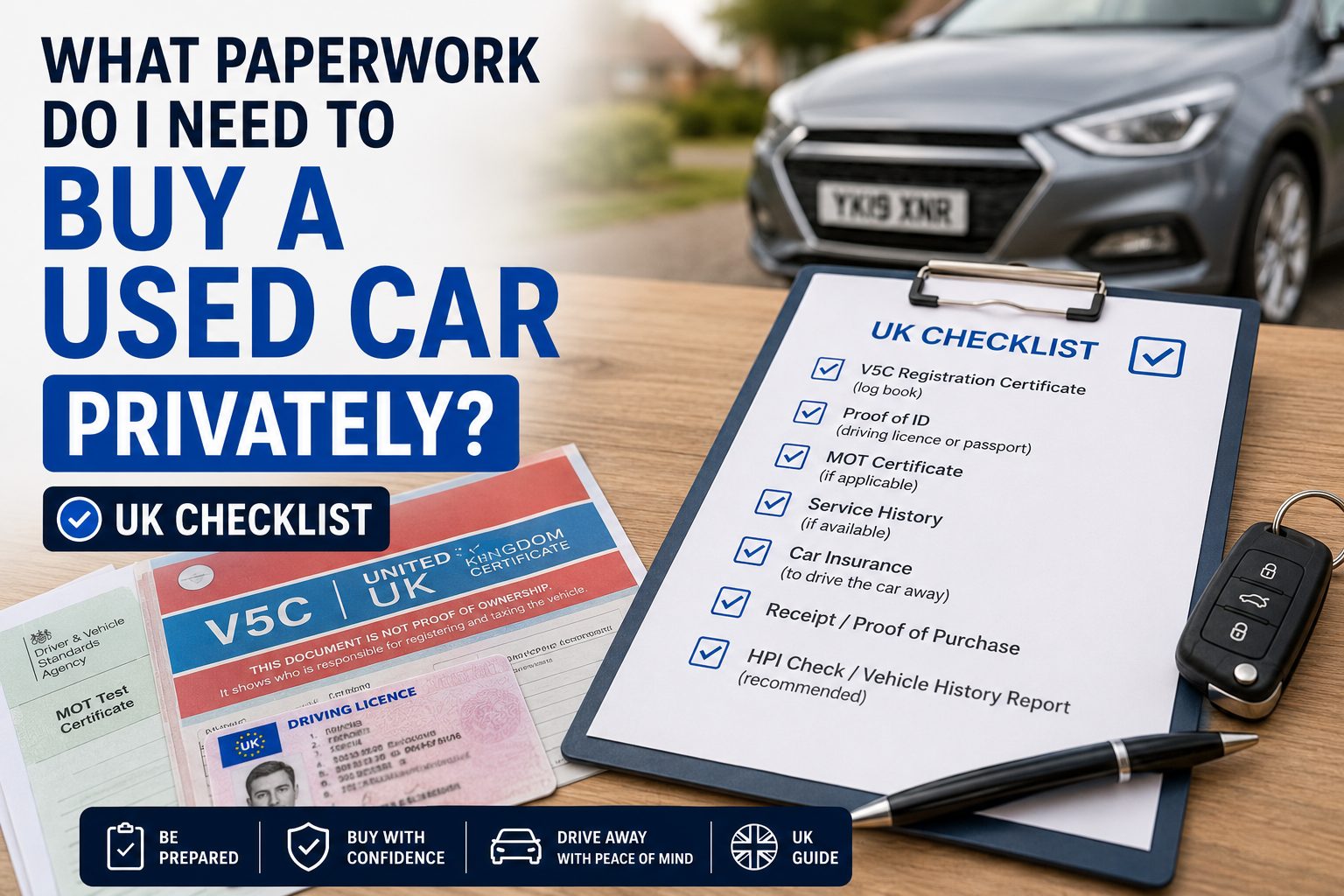
What Paperwork Do I Need to Buy a Used Car Privately? (UK Checklist)
Buying a used car from a private seller is one of the best ways to get a great deal and avoid steep dealership markups. However, because private sales are legally classed as “sold as seen,” the responsibility is entirely on you to make sure the car’s paperwork is legitimate before you hand over your hard-earned money.
Walking away from a bad deal is easy; getting your cash back from a private individual after a sale is incredibly difficult.
Before you sign a receipt or transfer any funds on a driveway, run through this absolute non-negotiable paperwork checklist.
1. The V5C Logbook (The Single Most Important Document)
Never, under any circumstances, buy a used car privately if the seller cannot produce the original, physical V5C registration certificate (commonly called the logbook).
Check the Watermark: Hold the V5C up to the light to look for the official “DVL” watermark. If it looks like a photocopied sheet, walk away.
Match the Address: Look at the name and address of the Registered Keeper on the front page. It should match the seller’s ID, and you should ideally be viewing the vehicle at that exact address. If they are selling the car on behalf of a “friend” or meeting you in a neutral car park, treat it as a massive red flag.
Verify the VIN: Match the 17-digit Vehicle Identification Number (VIN) printed on the logbook with the physical plates on the car (usually found at the base of the windscreen or stamped on a metal plate under the bonnet).
2. A Proven Vehicle History Check (HPI Report)
The logbook only tells you who keeps the car—it does not prove legal ownership. If a vehicle has outstanding finance on it, the finance company legally owns the car, and the private seller has no right to sell it to you.
Before your viewing, spend a few pounds on an independent vehicle history check (like HPI, Experian, or TotalCarCheck) using the car’s registration plate. This report will tell you:
If there is outstanding finance.
If the car has been reported stolen.
If the vehicle has been written off or structurally damaged by an insurance company (Category S, N, C, or D).
3. The Digital MOT History
Vehicles over three years old require a mandatory annual MOT test to be legally roadworthy. You do not need the seller to hand you a paper slip for this—you can check the full, official history for free on the GOV.UK vehicle checker.
Type in the registration number to check:
The Expiry Date: When does the current MOT run out?
The Advisory Notes: Look closely at the latest test. If it passed but has “advisories” for thinning brake pads or worn tyre treads, you should use these upcoming repair costs to negotiate a lower buying price.
Mileage Consistency: Ensure the mileage recorded at each annual MOT goes up in a steady, logical pattern. If the mileage suddenly drops between years, the odometer may have been illegally altered (“clocked”).
4. Service History & Maintenance Receipts
A complete service history is proof that the previous owner actually cared for the vehicle.
The Service Book: Look for regular garage stamps matching the manufacturer’s recommended intervals (usually every 12 months or 10,000 miles).
Digital Records: Many modern cars store service history electronically. Ask the seller to log into their manufacturer portal or provide printouts from the main dealer.
Parts Invoices: A folder full of physical receipts for recent tyres, cambelt replacements, or brake discs proves the car has been maintained with real parts, rather than run on a tight budget.
Driveway Summary: What You Take Home
Once you are happy with the history and have agreed on a price, the driveway handover must include:
Looking for your next ride? Avoid inflated dealership prices and hidden admin fees. Browse verified private listings directly from individual owners on our marketplace today. https://swapauto.co.uk/sell-car-privately/