How to Check Used EV Battery Health (Private Buyer’s Guide)
With used electric vehicles (EVs) becoming incredibly affordable, thousands of UK motorists are skipping dealership markups to buy their first electric car from a private seller. However, buying a used EV requires a completely different approach to checking a standard petrol or diesel car.
You don’t need to worry about oil leaks, head gaskets, or exhaust pipes. Instead, your primary focus must be on the single most expensive component of the vehicle: the traction battery pack.
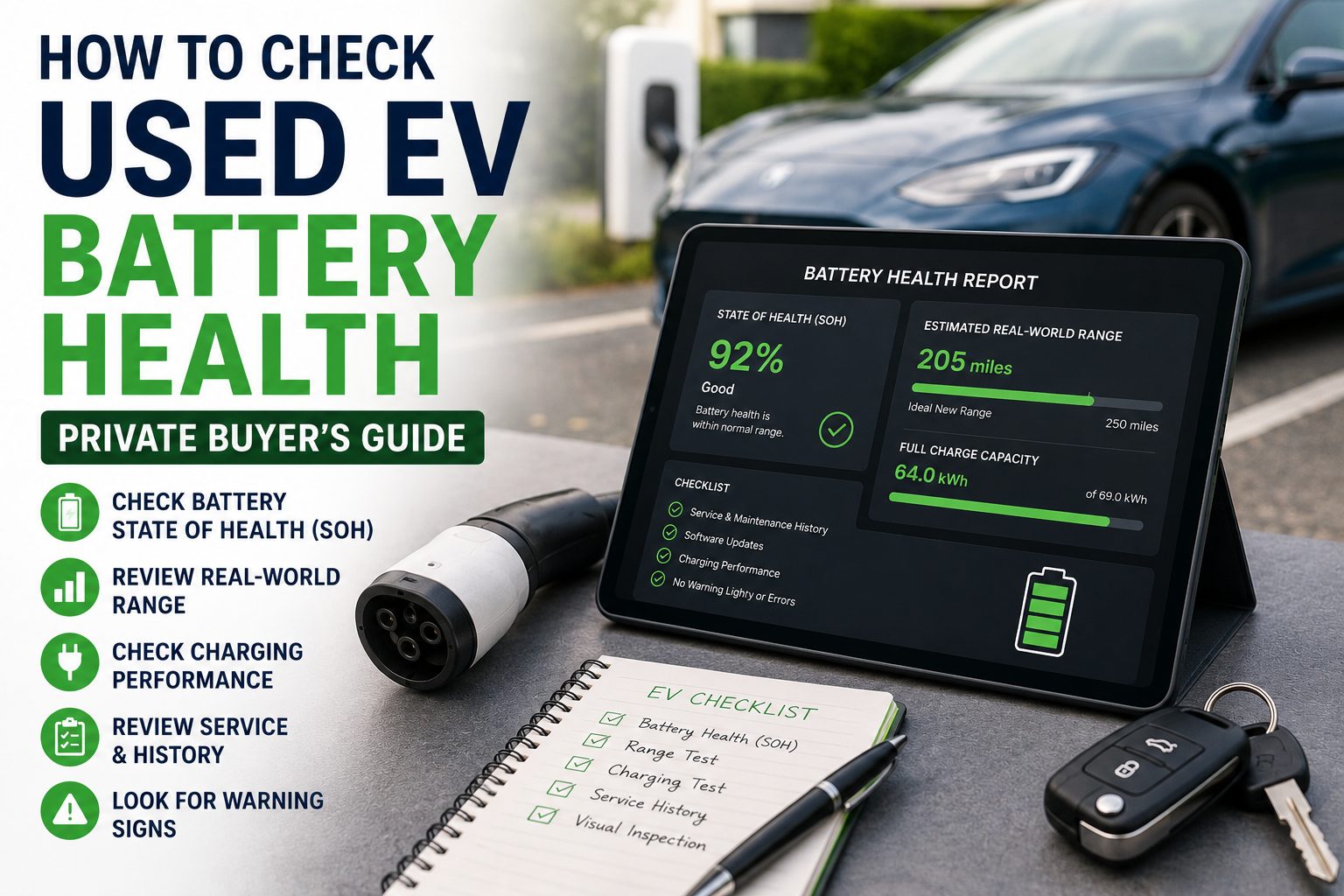
Losing a small amount of battery capacity over time is perfectly normal (typically 2% to 3% per year), but you need to know exactly how much life is left before you hand over any money. Here is how to perform a comprehensive EV battery and system check right on a private seller’s driveway.
1. How to Read the State of Health (SoH)
The State of Health (SoH) is a percentage score that compares the battery’s current maximum capacity against what it could hold when it was brand new. For example, a car with a 90% SoH has only lost 10% of its original factory range.
Ideally, you want to target vehicles with an SoH above 80-85%. If a car is under five years old and drops below 75%, it indicates the previous owner may have abused the battery with constant rapid charging.
Depending on the brand you are looking at, you can check this figure on the driveway using a few simple methods:
The Dashboard Settings: Many electric cars allow you to check battery degradation directly through the central infotainment touchscreen or instrument cluster. For instance, on a Nissan Leaf, it is shown as physical bars on the dashboard display (12 bars means 100% health). On other models, you will need to navigate through
Settings > Vehicle StatusorServicemenus.The 100% Range Test: If the dashboard doesn’t display a neat percentage, ask the private seller to have the vehicle charged to 100% before you arrive. Look at the displayed estimated range on the dash and compare it directly to the manufacturer’s original official range (WLTP rating). While weather and driving styles affect this estimate, a massive discrepancy suggests significant battery degradation.
2. Spotlight on Trending Chinese EVs (BYD Atto 3, Dolphin, & Seal)
Searches for new EV brands like BYD are surging in the UK. Because these vehicles utilize advanced LFP (Lithium Iron Phosphate) “Blade” batteries, they handle ownership differently than older electric cars. If you are inspecting a used BYD privately, pay attention to these two specific factors:
App Ownership Transfer: BYD models rely heavily on the official smartphone app for keyless entry, pre-heating, and monitoring. On the driveway, ensure the private seller is prepared to log out and legally transfer the “Master Account” of the vehicle’s embedded SIM card to your email address.
The 100% Charging Habit: Unlike traditional EV batteries which degrade if kept at 100%, LFP Blade batteries prefer being charged to 100% at least once a week to calibrate their software sensors. Ask the seller about their charging habits—regular home charging to full capacity is actually a great sign for a used BYD.
3. Physical Inspection of the Charging Ports
The battery might be healthy, but if the ports are damaged, you won’t be able to get any power into it.
Inspect Both Ports: Open the charging flap and look closely at both the AC port (used for slow home charging) and the DC port (used for rapid highway charging). Look inside with a phone torch to ensure there are no cracks in the plastic housing, no bent metal pins, and zero signs of green corrosion or burn marks.
Check the Flap Mechanism: Ensure the motorized or manual locking flap seals tightly. If water enters the charging pins while driving in heavy UK rain, it can trigger an immediate electrical fault that stops the car from running.
Don’t Forget the Cables: A replacement Type 2 charging cable can easily cost between £100 and £300. Ensure the private seller throws in the original home charging cables (both the 3-pin “granny charger” and the public charging cable) and check that the rubber insulation isn’t frayed.
The Golden Rule: Check the Remaining Manufacturer Warranty
Most electric car manufacturers provide a completely separate, extended warranty specifically for the high-voltage battery pack. This is typically 8 years or 100,000 miles (whichever comes first), guaranteeing that the battery will not drop below 70% health during that window.
Before buying, check the car’s first registration date in the V5C logbook. If you are buying a 3-year-old electric car with 30,000 miles on the clock, you still have 5 years and 70,000 miles of manufacturer-backed peace of mind remaining.
Ready to make the switch to electric? Don’t pay inflated dealership prices. Browse a wide selection of pure electric and hybrid vehicles listed directly by private sellers on our marketplace. https://swapauto.co.uk/sell-car-privately/